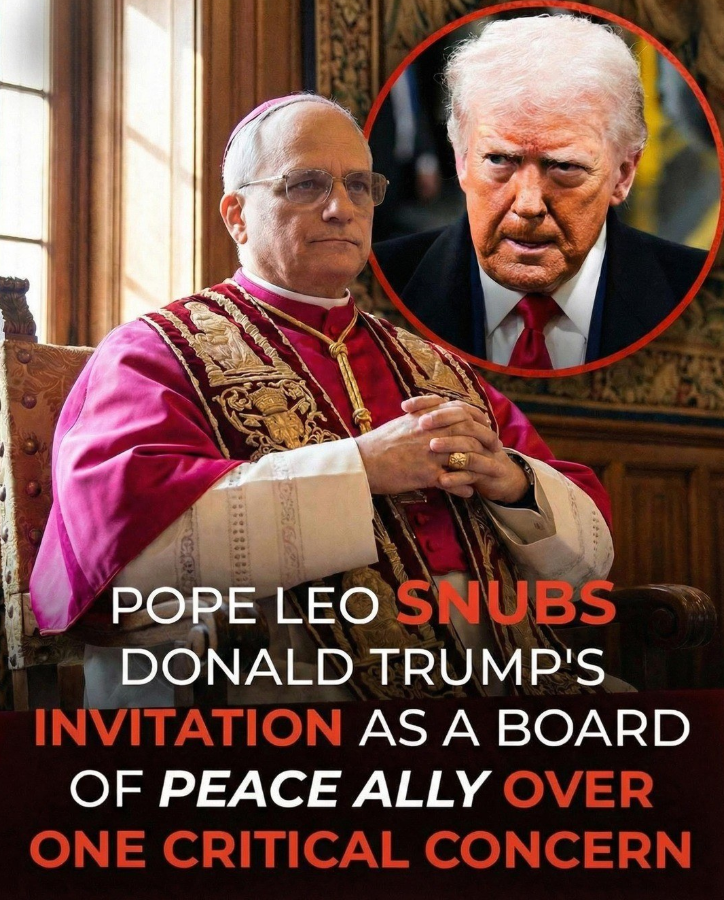
The Donald Trump administration has invited the Holy See to participate in a newly announced international peace initiative, placing the Vatican at the center of a major diplomatic discussion. The proposal, introduced earlier this year, aims to support post-conflict recovery and long-term stability in Gaza. While the invitation signaled a desire for broad global cooperation, the Vatican has now formally clarified its position following a high-level meeting in Rome.
In January, President Trump unveiled what the White House described as a comprehensive framework for peace, including the creation of a “Board of Peace.” According to administration officials, the board would oversee key elements of the transition process, coordinate international partners, and help guide reconstruction and development efforts. A senior official stated that nations and global institutions willing to contribute to the effort would be welcomed. Although specific diplomatic conversations were not detailed publicly, the Vatican was openly invited to join the initiative alongside other international stakeholders.
This week, the Vatican’s response came during a bilateral engagement marking the anniversary of the Lateran Pacts. Speaking to reporters, Vatican Secretary of State Cardinal Pietro Parolin explained that the Holy See would not participate in the proposed board. He emphasized that the Vatican’s unique spiritual and diplomatic nature distinguishes it from other states and organizations. While acknowledging the importance of peace efforts, he noted that certain aspects of the proposal raised questions that would require further clarification. He also reiterated the Vatican’s longstanding view that international crises are best addressed through multilateral institutions, particularly the United Nations.
The White House responded respectfully but firmly. Press Secretary Karoline Leavitt stated that the administration believes peace initiatives should not be partisan or controversial and described the Vatican’s decision as unfortunate. President Trump has previously spoken positively about Pope Leo XIV, who has made clear that he does not intend to engage in partisan politics. In interviews, Pope Leo XIV has emphasized that while he remains open to dialogue on humanitarian and ethical concerns, primary political engagement with U.S. leadership is typically handled by American bishops. As global discussions about rebuilding and diplomacy continue, both Washington and the Vatican appear committed to their respective roles — one focused on policy implementation, the other guided by spiritual leadership and multilateral principles.