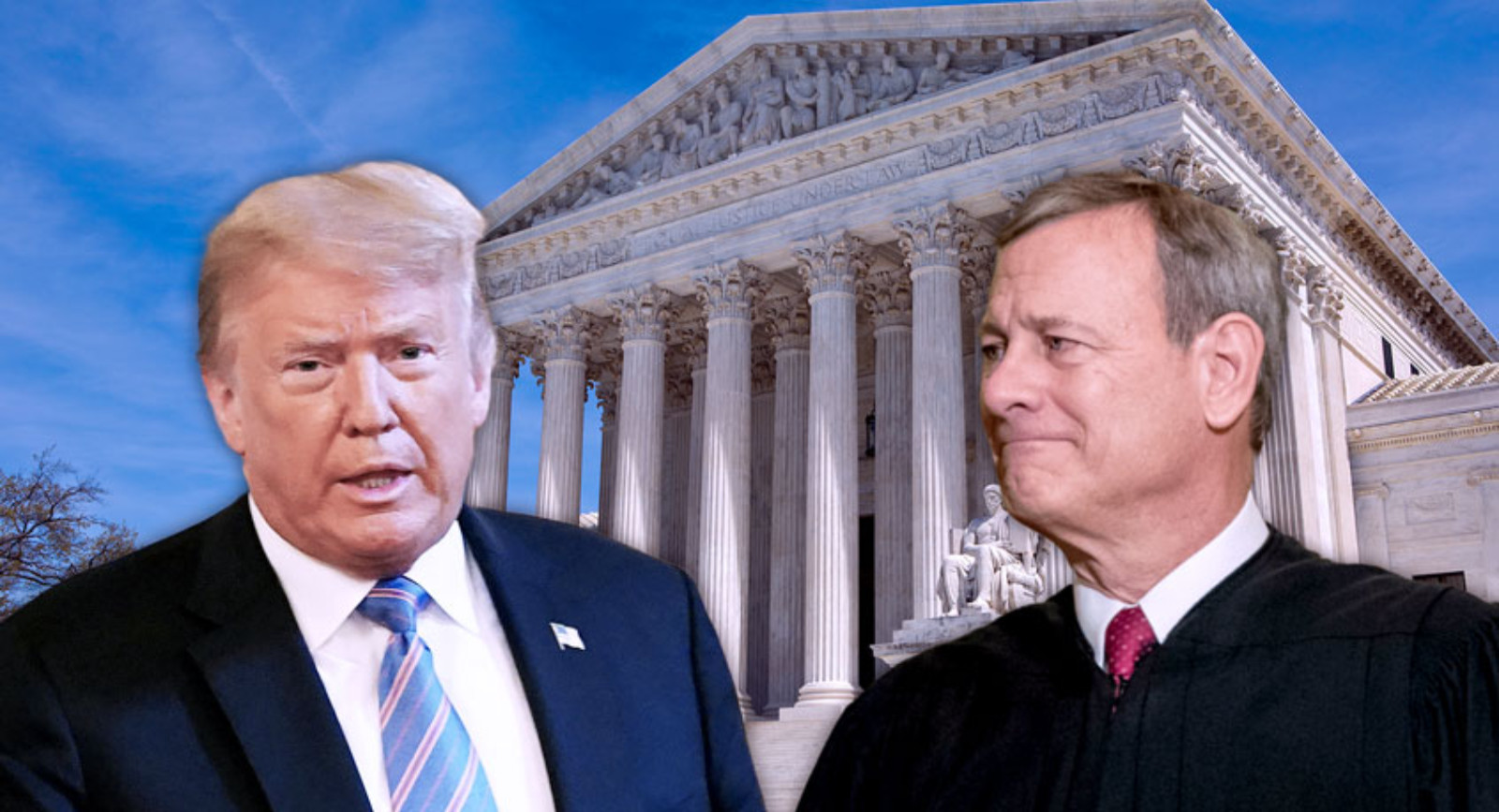
The U.S. Supreme Court on Monday decided not to consider whether art created by artificial intelligence can be copyrighted under U.S. law in response to a case involving a computer scientist from Missouri who was denied a copyright for a piece of visual art produced by his AI system.
The plaintiff, Stephen Thaler, had appealed to the justices after lower courts upheld a decision by the U.S. Copyright Office that the AI-generated artwork in question was ineligible for copyright protection because it lacked a human creator.
Thaler, who is from St. Charles, Missouri, applied for federal copyright registration in 2018 for a work titled “A Recent Entrance to Paradise,” claiming that his AI technology, known as “DABUS,” had created the piece. The artwork depicts train tracks leading into a portal, surrounded by green and purple plant imagery.
The Copyright Office rejected his application in 2022, concluding that creative works must have human authors to qualify for copyright protection. During the period, the Trump administration urged the Supreme Court not to consider Thaler’s appeal, Reuters reported.
Additionally, the Copyright Office has rejected requests from artists seeking copyrights for images generated by the AI system Midjourney. These artists argued that they should be entitled to copyrights for images created with the assistance of AI, in contrast to Thaler, who claimed that his system independently created “A Recent Entrance to Paradise.”
In 2023, a federal judge in Washington upheld the Copyright Office’s decision in Thaler’s case, stating that human authorship is a “bedrock requirement of copyright.” The U.S. Court of Appeals for the District of Columbia Circuit affirmed this ruling in 2025.
Thaler’s lawyers informed the Supreme Court that his case was of significant importance due to the rapid rise of generative AI.
With the court’s refusal to hear an appeal, Thaler’s lawyers said, “even if it later overturns the Copyright Office’s test in another case, it will be too late. The Copyright Office will have irreversibly and negatively impacted AI development and use in the creative industry during critically important years.”
“Although the Copyright Act does not define the term ‘author,’ multiple provisions of the act make clear that the term refers to a human rather than a machine,” the administration said.
The Supreme Court previously denied Thaler’s request to hear his argument in a separate case related to prototypes for a beverage holder and a light beacon. The issue at hand was whether inventions generated by AI should be eligible for U.S. patent protection.
As a result, his patent applications were rejected by the U.S. Patent and Trademark Office on similar grounds.
Meanwhile, the Supreme Court on Monday evening granted a request from a group of parents in California to reinstate a ruling by a federal district court prohibiting schools in the state from “misleading parents about their children’s gender presentation.”
In addition, the ruling requires schools to follow parents’ instructions regarding the names and pronouns that children use there, Conservative Brief reported.
In a detailed seven-page ruling, the majority clarified that the parents were likely to succeed in their argument that California’s policies infringe upon their right to freely practice their religion and their right to guide the upbringing and education of their children.
Two of the court’s left-wing justices, Elena Kagan, joined by Ketanji Brown Jackson, dissented from the court’s ruling, arguing that Monday’s ruling “shows, not for the first time, how our emergency docket can malfunction.”
The dispute originated in 2023, when two teachers filed a lawsuit against the school district seeking an exemption from its policies on gender and pronouns. They were later joined by parents of children who either socially transitioned at school or believed their children had done so.
After the district court ruled in favor of the challengers, the U.S. Court of Appeals for the 9th Circuit temporarily suspended that ruling while the state appealed the decision. The challengers then escalated the case to the Supreme Court, asking the justices for intervention.