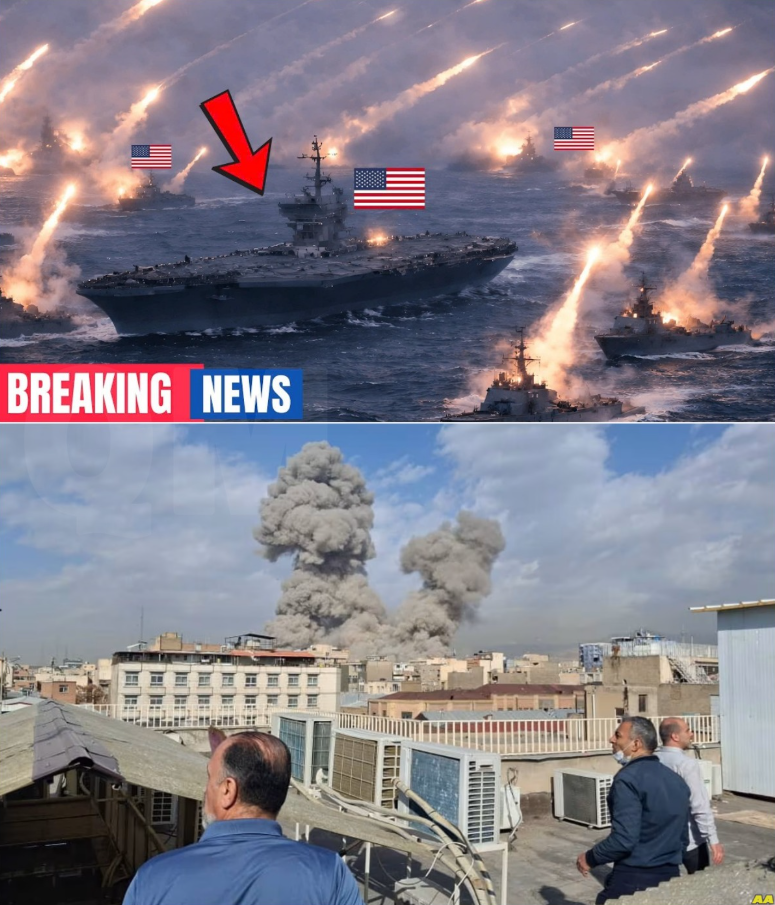
In a dramatic escalation of military presence, the United States has initiated its largest repositioning of forces in the Middle East in over two decades.
With two aircraft carriers and more than 140 warplanes at the ready, the stakes have never been higher.
As tensions simmer in the region, the USS Gerald R. Ford has departed the Caribbean, heading straight for the Persian Gulf to join the USS Abraham Lincoln, which is already deployed in the area.
This unprecedented military maneuver has raised eyebrows and sparked speculation about what lies ahead.
A Show of Force
The arrival of two carrier strike groups in such a volatile region is not merely a display of power; it is a strategic message aimed directly at Iran.
The U.S. military’s capabilities include F-35 stealth fighters, which are poised for deep penetration strikes, and F/A-18 Super Hornets, ready to maintain pressure on adversaries.
Additionally, Tomahawk cruise missiles are launched from destroyers, while EA-18G Growlers prepare to jam Iranian defenses.
This level of military readiness underscores the seriousness of the situation and the potential for conflict.

The Iranian Response
Iran, on the other hand, is not sitting idly by.
Reports indicate that the country possesses up to 2,000 ballistic missiles, extensive drone capabilities, and a network of proxy forces spread across the region.
These assets pose a significant threat to U.S. interests and allies, raising the question: Is this the prelude to a full-scale conflict, or merely a final warning before diplomacy collapses?

The Middle East is holding its breath as both sides prepare for possible escalation.
The implications of this military repositioning extend beyond mere regional dynamics; they have the potential to affect global stability.
As the U.S. strengthens its military posture, Iran may feel compelled to respond aggressively, leading to a dangerous cycle of retaliation.
A Call for Diplomacy
In light of these developments, the international community must urge both sides to seek diplomatic solutions.
The consequences of a military conflict would be catastrophic, not only for the countries involved but for the entire world.
The stakes are too high for miscalculations or misunderstandings.
Conclusion
As the situation unfolds, the world watches closely.
The U.S. military’s repositioning represents a critical juncture in U.S.-Iran relations and could determine the future of peace and stability in the Middle East.
Will this show of force lead to a resolution through diplomacy, or are we on the brink of a new conflict?
Only time will tell, but one thing is certain: the eyes of the world are upon us.
This content is a fictional scenario created for educational, analytical, and storytelling purposes only.
The events, timelines, characters, military actions, and outcomes described do not represent real historical events and should not be interpreted as factual reporting, intelligence information, or official military records.