President Donald Trump played a decisive role in shaping the current makeup of the U.S. Supreme Court. But the president expressed sharp disappointment Friday after the high court ruled against his administration’s tariff authority.
In a 6-3 decision, the Supreme Court ruled that under the 1977 International Emergency Economic Powers Act, Trump does not have the authority to impose tariffs, stating that power is assigned to Congress under the Constitution, NBC News reported.
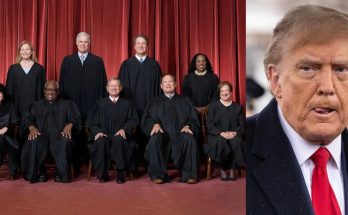
Justices Clarence Thomas, Samuel Alito and Brett Kavanaugh dissented. Chief Justice John Roberts joined Justices Neil Gorsuch and Amy Coney Barrett along with the court’s three liberal justices in the majority. Trump nominated Gorsuch, Kavanaugh and Barrett during his first term.
Trump criticized members of the court without naming them directly.
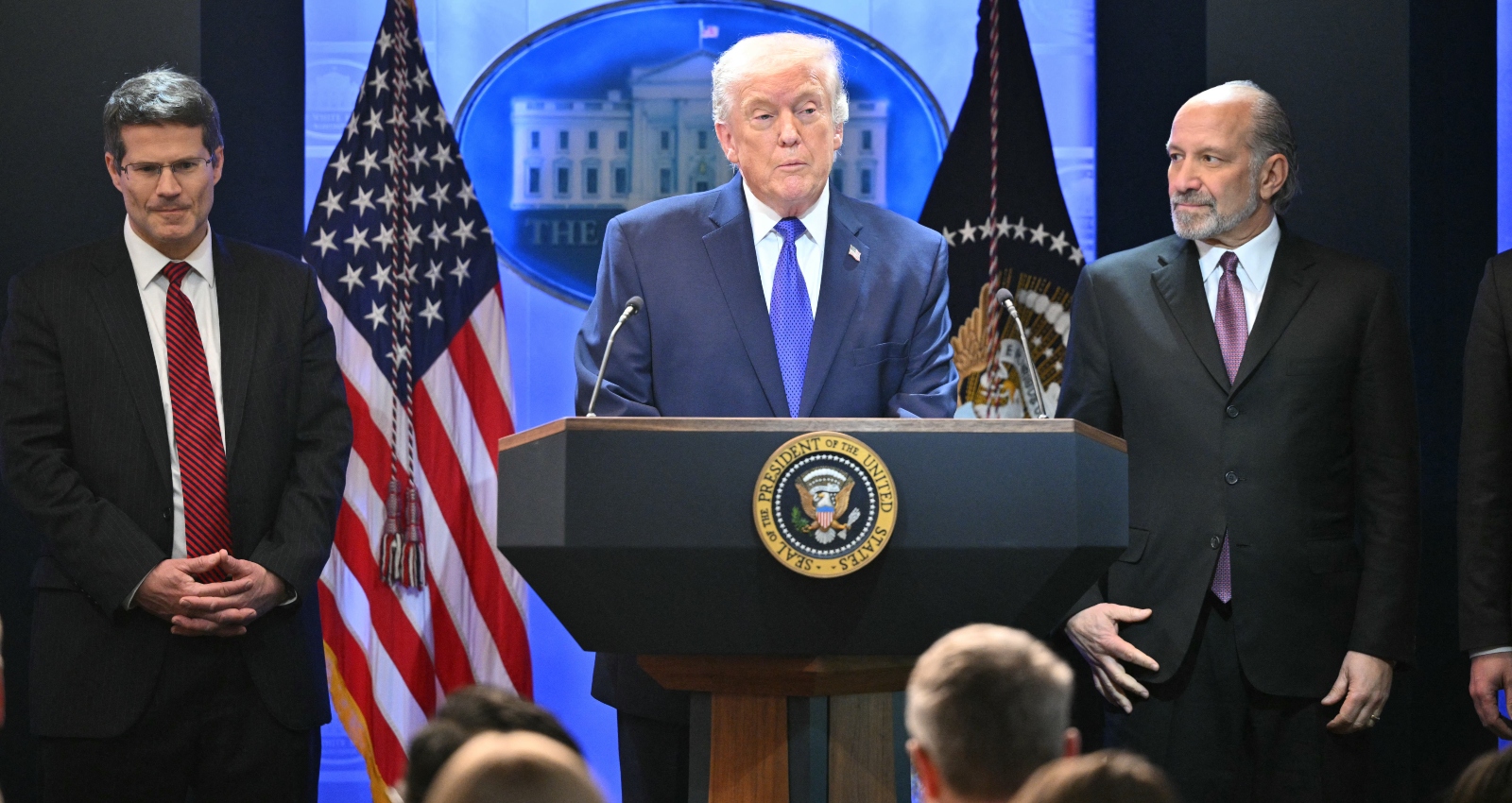
“The Supreme Court’s ruling on tariffs is deeply disappointing, and I’m ashamed of certain members of the court, absolutely ashamed for not having the courage to do what’s right for our country,” Trump said, according to Politico.
When asked whether he regretted nominating Gorsuch and Barrett, the president responded pointedly.
“I think it’s an embarrassment to their families, you want to know the truth — the two of them,” he said.
The ruling represents a significant setback for Trump’s economic agenda, which has relied heavily on tariffs.
The president then suggested the court’s decision may have been influenced by outside forces.
“It’s my opinion that the court has been swayed by foreign interests and a political movement that is far smaller than people would ever think,” Trump said, according to The Guardian.
When pressed for details, Trump told reporters, “You’re going to find out,” according to Politico.
“I think that foreign interests are represented by people that I believe have undue influence,” he added, according to NBC News. “They have a lot of influence over the Supreme Court, whether it’s through fear or respect or friendships, I don’t know.”
Trump also criticized what he described as “the other side.”
“But I know some of the people that were involved on the other side, and I don’t like them,” he said. “I think they’re real slimeballs.”
The Trump administration has indicated it will pursue alternative legal avenues to continue its tariff policies.
Supreme Court Justice Clarence Thomas sounded off in his dissent.
“Neither the statutory text nor the Constitution provides a basis for ruling against the President. Congress authorized the President to ‘regulate . . . importation.’ Throughout American history, the authority to ‘regulate importation’ has been understood to include the authority to impose duties on imports,” Thomas declared.
“The meaning of that phrase was beyond doubt by the time that Congress enacted this statute, shortly after President Nixon’s highly publicized duties on imports were UPHELD based on identical language. The statute that the President relied on, therefore, authorized him to impose the duties on imports at issue in these cases,” Thomas added.
Thomas continued, “Because the Constitution assigns Congress many powers that do not implicate the nondelegation doctrine, Congress may delegate the exercise of many powers to the President. Congress has done so repeatedly since the founding, with this court’s blessing.”
George Washington University Law School professor and legal scholar Jonathan Turley said this isn’t over, adding the administration can still impose tariffs through other statutes.
“The administration has other tools in its toolbox. It can actually impose tariffs under other statutes,” Turley said, adding that there’s plenty of runway for the Trump White House in this area of economic policy.
Justice Brett Kavanaugh raised in a fiery dissent what he said would be “serious practical consequences” of the high court’s decision in terms of refunding illegitimately imposed tariffs.
“The United States may be required to refund billions of dollars to importers who paid the IEEPA tariffs, even though some importers may have already passed on costs to consumers or others,” Kavanaugh wrote. “As was acknowledged at oral argument, the refund process is likely to be a ‘mess.’”