The United States has responded firmly to a reported covert movement of Russian naval assets toward Iranian waters, heightening tensions in the Eastern Mediterranean and Gulf of Oman regions.
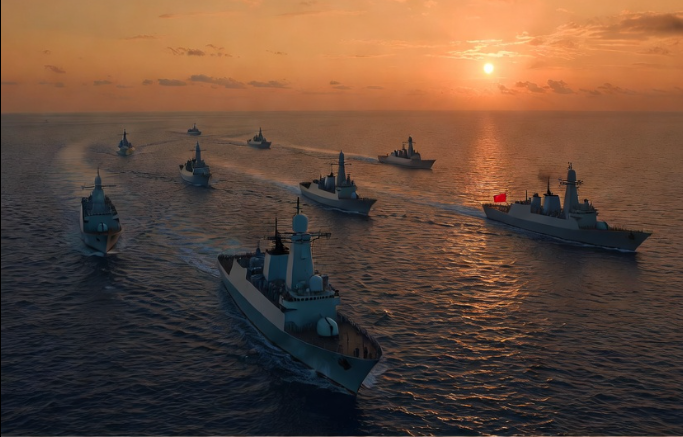
Western defense sources indicate that a Russian naval group—comprising frigates, missile corvettes, and auxiliary ships—left the Black Sea, ostensibly for standard training, before passing through the Suez Canal during nighttime hours.
Subsequent satellite observations showed the formation linking up with Iranian vessels and positioning near an Iranian facility on the Gulf of Oman coast. Reports from analysts suggest Russian crews may have begun handing over sophisticated anti-ship missiles and air-defense systems to strengthen Iranian coastal defenses, including those associated with the Islamic Revolutionary Guard Corps (IRGC).

U.S. intelligence followed the group’s progress closely, interpreting the activity as an effort by Moscow to broaden its regional military presence and strengthen ties with Tehran. In reaction, the U.S. Navy boosted its operational visibility in adjacent maritime areas, carrying out patrols and readiness exercises described by officials as measures to support allies and prevent further instability.

Although Russian and Iranian authorities have not framed the activity as hostile, Western assessments view it as a deliberate step that could affect maritime safety and the flow of energy supplies through key Gulf passages.
This development highlights the delicate power dynamics in the area, where naval movements and strategic posturing remain central to an increasingly unstable geopolitical environment.