The reckoning did not arrive with a dramatic speech or a televised ultimatum. It arrived quietly, methodically, and with paperwork. For years, Minnesota’s political culture rested on a deeply held assumption: that its reputation for clean governance, progressive ideals, and “Minnesota nice” placed it beyond the reach of serious federal consequence. That assumption collapsed not with outrage, but with action, when Donald Trump returned to power and the federal government began looking closely at systems long treated as untouchable.
This was not campaign theater. There were no rallies or slogans attached to what followed. Instead, there were audits reopened, grants paused, funding streams frozen mid-cycle, and investigators reexamining programs once shielded by moral language. Federal agencies moved through Minnesota’s bureaucratic corridors with a clarity that left little room for interpretation. Programs promoted as humanitarian necessities—childcare subsidies, food access initiatives, pandemic relief funds, small-business aid—were suddenly exposed as structurally lax, poorly monitored, and vulnerable to abuse. In several cases, oversight had not merely failed; it had been avoided.
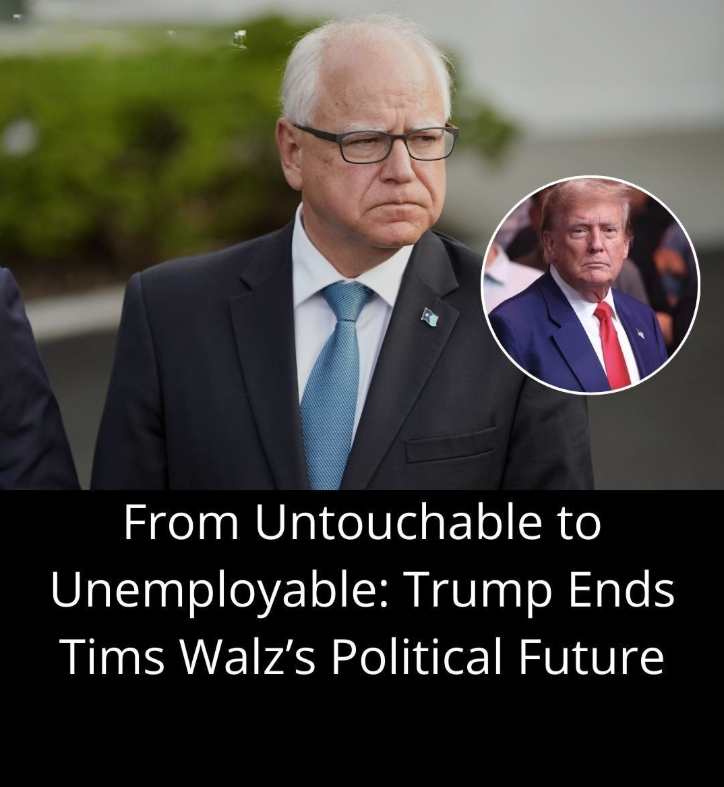
Against this backdrop, Tim Walz announced he would not seek reelection. Officially, the decision was framed as personal, a natural conclusion to public service. Unofficially, the timing spoke louder than any statement. When a sitting governor steps aside just as federal scrutiny intensifies across state agencies, the absence of explanation becomes its own message. In politics, silence rarely signals confidence. More often, it signals calculation.
Walz and his allies were quick to characterize the investigations as ideological retribution—an aggressive federal posture driven by political vendetta rather than principle. It is a familiar defense, and in some cases historically justified. But the widening scope of the inquiries complicated that argument. Subpoenas did not target a single office or faction. They spread across departments, nonprofits, contractors, and intermediaries. Funding suspensions did not discriminate by rhetoric; they followed patterns of mismanagement. What emerged was not a narrative of persecution, but of systems built on trust without verification.
For years, questioning these programs had been treated as a moral offense. Critics were dismissed as heartless, reactionary, or hostile to the vulnerable. The language of compassion became armor, deflecting scrutiny by reframing oversight as cruelty. That shield is now gone. Federal investigators are not interested in intentions; they are interested in outcomes, records, and controls. And what they are finding suggests that empathy, however sincere, was allowed to replace accountability.
The human cost of that failure sharpens the moment. Children enrolled in food programs that were siphoned by intermediaries. Families promised housing assistance that never arrived. Small businesses excluded while funds flowed through opaque channels. Taxpayers watched billions allocated in the name of justice evaporate with little explanation. These were not abstract losses. They were real harms, hidden behind reassuring language and progressive branding.
Trump’s strategy is neither subtle nor apologetic. The message is blunt: good intentions do not excuse bad governance. Programs designed to help the vulnerable must be built to withstand abuse, not invite it. Empathy without enforcement is not compassion; it is negligence. By directing federal agencies to follow the money, reopen closed files, and treat Minnesota like any other state, the administration is betting that voters are exhausted by symbolism and hungry for results.
This approach carries political risk. Federal crackdowns can backfire if perceived as punitive or selective. But the administration appears confident that the scale of the findings will justify the posture. Each new revelation reinforces a central claim: that systems praised for their virtue were allowed to operate without sufficient guardrails, and that leaders mistook reputation for reality.
Walz’s departure does not end this story. If anything, it marks a transition from political narrative to institutional reckoning. Investigations do not pause for elections. They do not soften for legacy. Minnesota now faces questions that extend beyond any single figure or party. How did oversight become optional? Why were warnings ignored? Who benefited from the lack of controls, and who paid the price?
The state’s cherished self-image is now under examination. For decades, “Minnesota nice” implied integrity by default. That assumption fostered trust, but it also bred complacency. When systems are presumed virtuous, they are rarely tested. When they are not tested, they fail quietly. The current moment forces a confrontation with that reality.
What happens next will determine whether this is a moment of reform or retrenchment. The federal spotlight is unforgiving, but it is also clarifying. It strips away rhetoric and demands evidence. For leaders accustomed to operating on moral authority alone, that shift is destabilizing. For citizens who have watched promises go unfulfilled, it may feel overdue.
Trump has framed this as accountability, not revenge. Whether that framing holds will depend on what the investigations ultimately reveal and how consequences are applied. But one thing is already clear: the era of immunity through image is over. Minnesota is no longer insulated by reputation. It is subject to the same scrutiny as any other state, and the findings suggest that scrutiny was long overdue.
The illusion has broken. What replaces it—renewed trust built on transparency, or deeper cynicism fueled by denial—will define Minnesota’s political future far more than any individual career.