The mobilization of United States Marines to assist Immigration and Customs Enforcement (ICE) operations within the domestic interior represents a watershed moment in American civil-military relations, signaling a dramatic escalation in the federal approach to border security and internal enforcement. With an initial deployment of 200 Marines dispatched to Florida, and subsequent units slated for Louisiana and Texas, the administration has moved to integrate the logistical might of the armed forces into the administrative machinery of the Department of Homeland Security. This maneuver has landed in the middle of a national landscape already fractured by debates over the ethics of immigration, the limits of executive power, and the increasingly blurred line between national defense and domestic policing.
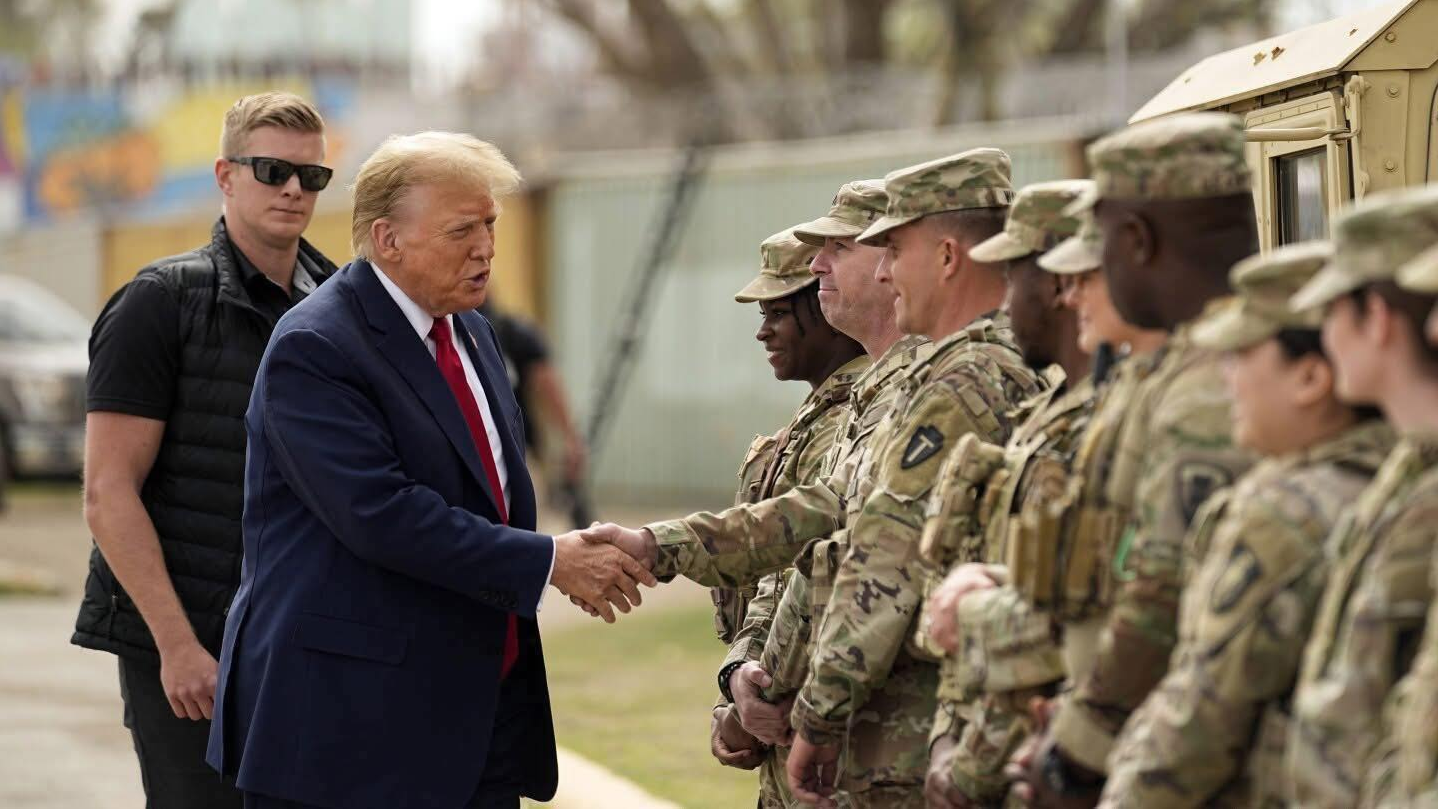
According to official briefings from the Pentagon, the scope of the Marines’ mission is intentionally narrow, designed to navigate the complex legal constraints of the Posse Comitatus Act, which generally prohibits the use of federal military personnel to enforce domestic policies. Military officials have gone to great lengths to emphasize that these service members are not functioning as “boots on the ground” in a traditional combat or arrest capacity. Instead, their role is defined by administrative and logistical necessity. They are stationed inside detention facilities to manage supply chains, oversee facility maintenance, and handle clerical processing—tasks that have historically overwhelmed civilian staff. Under current orders, these Marines are strictly barred from direct law enforcement activities, such as making arrests, conducting searches, or engaging in tactical migrant interdiction. To the architects of this policy, the deployment is a pragmatic solution to a bureaucratic crisis, a way to apply military efficiency to a system that is currently buckling under its own weight.
However, for a significant portion of the American public, these legal distinctions feel like “fine print” that does little to soften the visual and psychological impact of the deployment. The sight of camouflage uniforms and military-grade equipment moving through civilian detention centers has created an optics crisis that transcends administrative utility. For immigrant-rights organizations and civil liberties advocates, the presence of the Marines is not seen as a helping hand to an overworked agency, but as a deliberate instrument of intimidation. They argue that the very appearance of the military in a domestic context sends an unmistakable message to immigrant communities: that they are being viewed through the lens of a security threat rather than a humanitarian or administrative concern. This perception has turned the detention facilities in Florida and the Gulf Coast into flashpoints of protest, where the presence of the “few and the proud” is interpreted as the vanguard of a more militarized state.
Within the halls of government, the deployment is defended as an essential “force multiplier.” Proponents argue that by utilizing Marines for “behind-the-wire” support tasks, the government can free up thousands of ICE field agents who were previously tethered to desks or supply depots. This allows for a surge in fieldwork and the clearing of massive processing backlogs that have left many migrants in legal limbo for months. Defenders of the move point to the humanitarian benefits of a more efficient system—arguing that better-managed facilities, supported by military logistics, lead to more reliable food service, medical supply distribution, and overall safety for those in custody. They frame the military’s involvement as a temporary necessity, a surge of professional support to stabilize a critical government function until civilian hiring can catch up with the demand.
Yet, in the communities along the southern corridors of the United States, the deployment is read through a much more symbolic and visceral lens. In cities throughout Texas and Louisiana, where military bases and border culture often intersect, the arrival of these units is seen as the realization of a government willing to apply the tools of foreign war to its own domestic territory. It raises fundamental questions about the future of the American “border” as a concept. Is it a line on a map regulated by civil law, or is it a permanent zone of military operations? For local residents, the “logistical support” provided by the Marines is indistinguishable from the broader militarization of their daily environment, where surveillance drones, armored vehicles, and now active-duty uniforms have become the new normal.
The legal and ethical debate is further complicated by the historical precedent of military involvement in domestic affairs. While the National Guard is frequently deployed by governors to handle natural disasters or civil unrest, the use of active-duty federal troops—especially a branch as specialized as the Marines—carries a different weight of authority and intent. Constitutional scholars have noted that while the “logistical” loophole provides a temporary legal shield for the administration, the long-term implications for the separation of powers are profound. If the military can be used to “support” ICE, can it eventually be used to “support” other domestic agencies in ways that slowly erode the barrier between the citizen and the soldier?
As the initial 200 Marines settle into their roles in Florida, the gaze of the nation is fixed on the upcoming deployments to the border states. The success or failure of this mission will likely be measured in two very different ways. The administration will likely point to data—the number of cases processed, the tons of supplies moved, and the reduction in overtime hours for ICE agents. Conversely, critics will point to the social cost—the deepened fear in migrant communities, the strain on the military’s own readiness, and the symbolic damage to the image of the U.S. as a nation that handles civil immigration through civil means.
The deployment stands as a powerful testament to the current era of American politics, where the “unthinkable” quickly becomes the “operational.” It reflects a government that prioritizes decisive action and security optics over the traditional norms of domestic administration. Whether this is a temporary fix for a broken system or the first step toward a permanently militarized enforcement apparatus remains to be seen. What is clear, however, is that for the people living in the shadow of these facilities, the distinction between a clerk in a suit and a Marine in a utility uniform is a difference that changes everything. The government has brought the tools of national defense to the internal gates of the country, and in doing so, it has redefined the boundaries of what it means to be a nation under guard. As this policy expands into the heart of the American South, the world watches to see if the Marines are there to fix a backlog or to fundamentally change the character of the American interior.