The global geopolitical landscape has been thrust into a state of heightened tension as Donald Trump reignites a controversial campaign that many had thought was a relic of his previous administration. With the 2026 World Cup fast approaching—an event intended to foster international unity—the former president has instead utilized the global stage to issue a series of provocative threats against European allies. At the heart of this escalating diplomatic row is Trump’s renewed and relentless push for the United States to acquire Greenland, a proposal that has evolved from a transactional curiosity into a cornerstone of his current “national security” rhetoric.
Trump’s fixation on the world’s largest island is rooted in a belief that Greenland is a vital strategic asset in a rapidly changing Arctic. In recent statements, he has argued that American ownership of the territory is not merely a matter of territorial expansion, but a necessity for global stability. Citing the increasing presence of Russia and China in the northern latitudes, Trump has painted a picture of a “security vacuum” that only the United States can fill. He claims that foreign adversaries are seeking to establish a permanent foothold on the island, potentially threatening American interests and the integrity of the NATO alliance.
However, Greenland is an autonomous territory within the Kingdom of Denmark. While it manages its own internal affairs, its foreign and security policy is inextricably linked to Copenhagen. The response from Danish and Greenlandic leaders has been a resounding and unequivocal rejection. Mette Frederiksen, the Danish Prime Minister, has previously characterized the idea of selling Greenland as “absurd,” a sentiment that has only grown more forceful as Trump’s rhetoric has intensified. Greenlandic officials have been equally blunt, asserting that while they are open for business and cooperation, the island is “not for sale.”
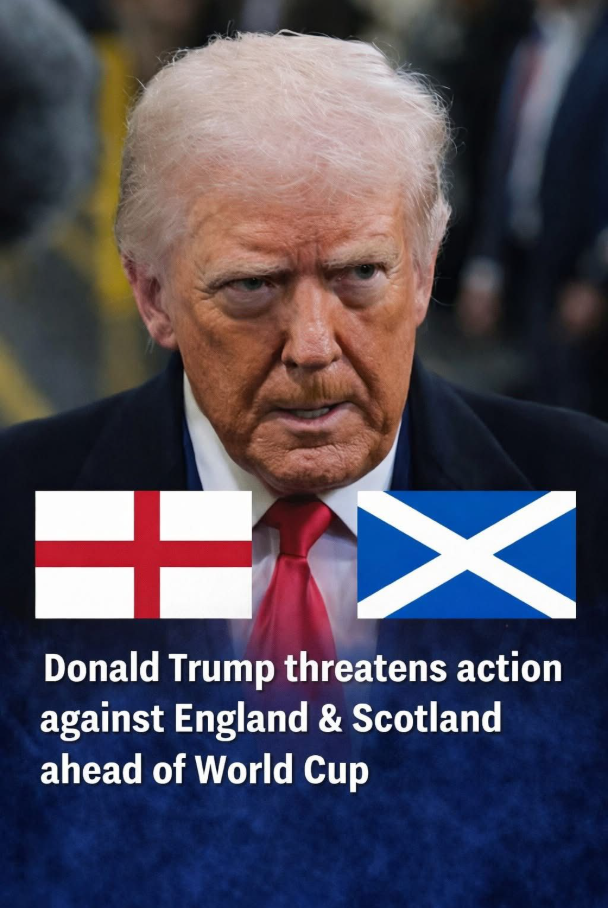
What has transformed this persistent ambition into an immediate diplomatic crisis is Trump’s recent shift toward punitive economic measures. In a series of social media posts and public appearances, he has expanded his target list beyond Denmark to include a broad swath of European nations. Countries such as the United Kingdom, Norway, Sweden, France, Germany, the Netherlands, and Finland have found themselves in his crosshairs. Trump has accused these nations of traveling to Greenland for “unknown and suspicious purposes,” suggesting a clandestine European effort to undermine American strategic interests in the region.
The primary weapon in Trump’s arsenal is the threat of aggressive trade barriers. He has announced plans to impose significant tariffs on goods from these European nations, arguing that economic pressure is required to bring allies “to the table” regarding the Arctic’s future. These threats have caused immediate ripples through international markets and have cast a long shadow over the preparations for the World Cup. Critics argue that using the tournament’s lead-up as a backdrop for trade wars is a radical departure from traditional diplomacy, potentially alienating the very allies the United States relies upon for security and economic cooperation.
The inclusion of the United Kingdom—specifically mentioning England and Scotland—has added a layer of complexity to the “Special Relationship.” British officials have expressed bewilderment at the accusations of “unknown purposes” in Greenland, noting that scientific research and environmental monitoring in the Arctic are standard international practices. The threat of tariffs comes at a sensitive time for the British economy, and the prospect of a trade dispute with a primary ally over an unrelated territorial ambition has been met with significant domestic backlash in London.
While Trump has not entirely ruled out “military options” in the most abstract sense of national defense, his current focus remains firmly on economic coercion. He has characterized the European nations as “taking advantage” of American protection while simultaneously engaging in what he calls “Arctic maneuvering.” By linking the acquisition of Greenland to a broader narrative of fair trade and global security, Trump is attempting to frame a 19th-century style territorial acquisition as a modern necessity.
The backlash from the international community has been swift and severe. Leaders across the European Union have condemned the threats as an attack on the sovereignty of Denmark and the autonomy of the Greenlandic people. Many analysts see this as a test of European solidarity, as Trump attempts to isolate individual nations through targeted economic pressure. There is a growing concern that these tactics will lead to a retaliatory cycle of tariffs, damaging the global economy and fracturing the Western alliance at a time of significant geopolitical uncertainty.
Domestically, the reaction has been polarized. Supporters of the former president see the push for Greenland as a bold, visionary move to secure American dominance in a new frontier. They argue that the strategic mineral wealth and the geographic position of the island are worth the diplomatic friction. Conversely, opponents view the crusade as a dangerous distraction that undermines established international norms and damages American credibility on the world stage. They point to the fact that the Arctic is governed by a series of international treaties and councils, all of which prioritize peaceful cooperation over unilateral expansion.
As the 2026 World Cup nears, the intersection of sport and high-stakes diplomacy has never been more visible. The tournament, which is being co-hosted by the United States, Canada, and Mexico, was supposed to be a showcase of North American hospitality and international friendship. Instead, the “Greenland Question” has become an unavoidable topic of conversation among the participating nations. Fans and athletes alike find themselves in the middle of a geopolitical storm that shows no signs of dissipating.
The situation remains fluid as European leaders coordinate their response to the tariff threats. For the people of Greenland, the sensation of being a pawn in a larger game of chess is a source of profound frustration. They continue to assert their right to self-determination, insisting that their future will be decided by the people who live on the island, not by leaders in Washington or Copenhagen. Whether Trump’s economic gambit will force a change in the status quo or simply lead to a prolonged period of isolation remains to be seen. What is certain is that the quest for Greenland has fundamentally altered the diplomatic landscape of 2026, turning a frozen island into the hottest flashpoint in international relations.