The world awoke to breaking news that immediately sent shockwaves through capitals across every continent. Former U.S. President Donald Trump announced that the United States had carried out airstrikes on three Iranian nuclear sites, describing the operation as “a very successful attack.” Within hours, global leaders were reacting—some with praise, others with alarm, and many with urgent appeals for restraint.
The strikes, according to Trump’s statement, targeted facilities linked to Iran’s nuclear program. Details about the scope of the damage, casualties, or the precise locations were not immediately confirmed through independent sources. What was clear, however, was the scale of the geopolitical tremor. The announcement reignited long-simmering tensions between Washington and Tehran and reopened deep divisions among world powers over how to address Iran’s nuclear ambitions.
In Tehran, officials responded with fury. Iranian leaders denounced the attack as an act of aggression and a violation of international law. They argued that the targeted facilities were part of a peaceful nuclear program and accused the United States of undermining global stability. Invoking the United Nations Charter, Iranian representatives signaled that they reserved the right to respond in self-defense. State media framed the strike as a criminal assault, warning that consequences would follow.
Israel, by contrast, quickly expressed support. Israeli officials have long maintained that Iran’s nuclear program poses an existential threat. In statements following the announcement, leaders in Jerusalem praised the action as decisive and historic, arguing that preventing Iran from obtaining a nuclear weapon justifies strong measures. For Israel, the strike represented a significant strategic development in a conflict that has simmered for decades through proxy battles, covert operations, and diplomatic standoffs.
Russia reacted sharply but from a different angle. Officials in Moscow criticized the attack, questioning both its legality and its broader implications. Some Russian commentators framed the strike as evidence that Washington was willing to destabilize entire regions in pursuit of its objectives. There were also suggestions that the move would shape Trump’s historical legacy—either as a bold leader who confronted a perceived threat or as a figure who deepened global instability.
China issued a more measured but firm response, calling for immediate de-escalation. Beijing reiterated its opposition to nuclear proliferation while stressing that military action risks spiraling beyond control. Chinese diplomats urged all parties to return to negotiations, warning that further escalation could disrupt global trade, energy markets, and regional security arrangements.
European leaders echoed similar concerns. Officials from the European Union and individual member states emphasized the importance of restraint and dialogue. While many European governments share the position that Iran must not develop nuclear weapons, they have historically favored diplomatic agreements and monitoring frameworks over unilateral military strikes. Several leaders warned that renewed conflict in the Middle East could trigger economic instability, refugee flows, and security threats extending far beyond the region.
Britain and Japan called for urgent diplomatic engagement. Both governments underscored their commitment to non-proliferation but expressed concern that direct military action could derail efforts to revive negotiations. Australia and South Korea similarly urged caution, highlighting the risk of broader regional fallout.
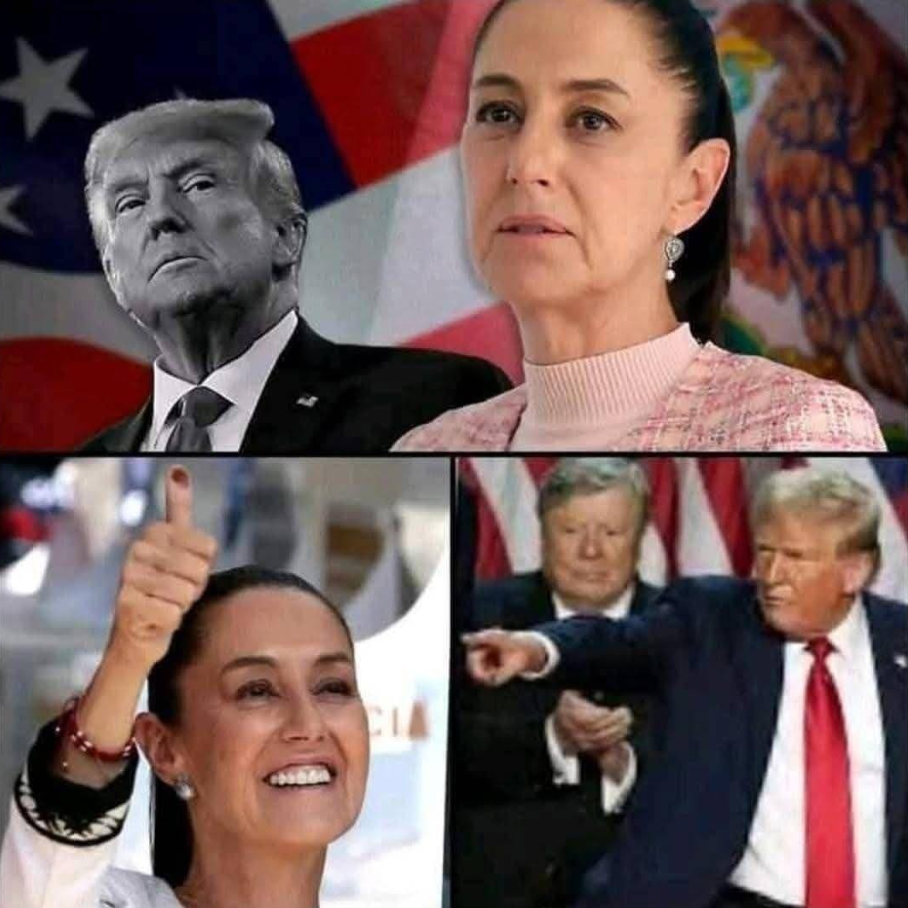
In Latin America, Mexico’s leadership expressed apprehension over rising global tensions. Officials there stressed the need for adherence to international law and multilateral frameworks, signaling unease about actions that could weaken global institutions. Across the Global South, the strike was viewed by some as another example of powerful nations acting unilaterally in ways that reshape international norms.
Regional actors in the Middle East responded with heightened anxiety. Saudi Arabia, which has its own complex relationship with Iran, called for calm while reinforcing its position that nuclear proliferation must be prevented. Lebanon and Yemen, already entangled in regional power struggles influenced by Iran and its rivals, warned that further escalation could ignite a wider conflict. The prospect of retaliatory strikes, proxy attacks, or disruptions to shipping lanes in the Gulf raised immediate concerns in global energy markets.
Religious leaders also weighed in. Pope Leo described the moment as a moral crossroads, urging world leaders to choose dialogue over destruction. He warned that cycles of retaliation risk entrenching violence and suffering for generations. The Vatican’s statement framed the crisis not only as a geopolitical flashpoint but as a test of humanity’s capacity to resolve disputes without resorting to war.
At the heart of the unfolding crisis lies a fundamental tension: how to prevent nuclear proliferation while avoiding catastrophic conflict. For years, Iran’s nuclear program has been a focal point of international diplomacy. Agreements, sanctions, withdrawals, and renegotiations have defined the last two decades of engagement. The airstrikes now threaten to unravel whatever diplomatic threads remain.
Markets reacted swiftly. Oil prices spiked amid fears of supply disruptions in the Strait of Hormuz, a critical artery for global energy shipments. Investors sought safe-haven assets, reflecting anxiety about prolonged instability. Analysts warned that even a limited exchange could ripple through financial systems already strained by geopolitical uncertainty.
Military analysts caution that the immediate aftermath will be critical. Iran could choose a range of responses—from direct retaliation to asymmetric actions through allied groups across the region. Cyber operations, missile strikes, or attacks on maritime targets are among the scenarios being discussed. The United States, in turn, would face decisions about further escalation or restraint.
For now, the world watches. Diplomatic channels are active, even if publicly overshadowed by strong rhetoric. Governments are balancing domestic political considerations with global responsibilities. Intelligence agencies are assessing risks. Military forces in the region are on heightened alert.
Whether this moment becomes a brief and contained episode or the opening chapter of a broader confrontation depends on decisions made in the coming days. Between triumph and fear, between deterrence and provocation, the path forward remains uncertain.
What is clear is that the strike has exposed deep divisions in how nations perceive security, sovereignty, and international order. Some view the action as a necessary step to halt a perceived existential threat. Others see it as a destabilizing gamble that could fracture already fragile systems of global cooperation.
As leaders debate, citizens across the globe absorb the implications. The possibility of wider conflict looms. Diplomacy, once again, stands as the fragile barrier between crisis and catastrophe.