Is the power of the U.S. President truly absolute? Donald Trump seems to think so. However, a fierce legal showdown at the Supreme Court is proving otherwise. Even justices he appointed are beginning to ask: Does a President have the right to dismantle the nation’s economic independence over a social media post?
1. The Opening Salvo: The Case of Trump v. Cook
On January 21, 2026, the U.S. Supreme Court echoed with fiery oral arguments in the historic case of Trump v. Cook. At the heart of the matter is Donald Trump’s effort to fire Federal Reserve Governor Lisa Cook.
Firing by… Tweet: Eschewing standard legal procedures, Trump announced Cook’s dismissal directly on Truth Social.
The Real Motive: Cook is alleged to have exercised independent judgment rather than following Trump’s political directives. For Trump, anyone who does not show absolute loyalty is an obstacle to be removed.
2. Skepticism from Within His “Own House”
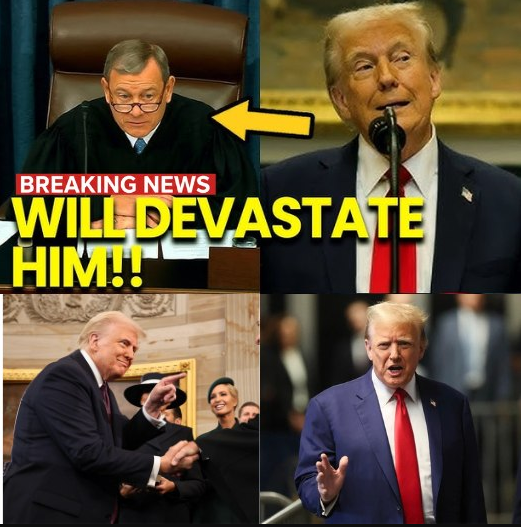
The most shocking aspect of the hearing was not the opposition from liberal justices, but the stance of the conservative justices—those placed on the bench by Trump himself.
Amy Coney Barrett – The Voice of Caution: Justice Barrett raised pointed questions regarding economic risks. She expressed concern that if the President has the power to fire Fed leaders over mere disagreements, it would create “market chaos” and push America toward “recession risks”.
The Collapse of Blind Loyalty: The skepticism shown by Barrett and her conservative colleagues suggests they prioritize Constitutional principles and national stability over serving the personal interests of the man who appointed them.
3. The Battle Between Financial Independence and Unitary Executive Power
The core of this lawsuit is the protection of the Federal Reserve’s independence—the agency that controls interest rates and monetary policy for the world.
Law vs. Ambition: The Federal Reserve Act of 1935 explicitly states that Governors cannot be removed “except for cause”.
Dire Consequences: If Trump prevails, the Fed could become a political tool. Economic decisions would no longer be based on data but on whether they help a President’s re-election. This could shatter global confidence in the U.S. dollar.
4. A Pattern of Consolidation Met with Resistance
The Lisa Cook case is not an isolated incident. it is part of Trump’s larger plan to purge anyone who dares to say “No”:
From Jerome Powell to Pam Bondi: Trump has consistently criticized Fed Chair Jerome Powell and pressured his own Justice Department.
Lower Court Rulings: Lower courts have already blocked the attempt to fire Cook, affirming that the President is not above the law. Now, the Supreme Court is Trump’s final hope—but it appears to be a slim one.
Conclusion: When the Law Is the Final Fortress
A final decision from the Supreme Court is expected by June 2026. If Trump loses, it will be a resounding testament that the American system of checks and balances is still functioning.
Donald Trump may have the power to appoint justices, but he does not have the power to dictate their consciences or their adherence to the rule of law. America is a government of laws, not of authoritarian tweets. The battle at the Supreme Court is not just about a seat at the Fed; it is a battle to protect the soul of American democracy from the rise of unchecked power.
🚨 BREAKING: Impeachment PAPERS RUSH IN After Trump INSULTS the CONSTITUTION 🇺🇸🔥 0002
The United States is entering a political crisis that is “unprecedented” in both its gravity and its rapid escalation. Only hours after Donald Trump issued shocking statements regarding the possible “termination” of constitutional provisions, Democrats launched an immediate counter-offensive by introducing impeachment articles in Congress. This is no longer a standard policy debate; it is an existential battle targeting the core foundation of American democracy.
1. The “Terminate the Constitution” Trigger and Lightning-Fast Response
The crisis erupted when Donald Trump, via social media and rallies, suggested that large-scale election fraud allows for the “termination of all rules, regulations, and articles, even those found in the Constitution”.
“Code Red” Reaction: White House correspondents described the situation as a maximum-level crisis. Trump was reportedly “red-faced” as he accused Democrats of “declaring war on democracy” through this impeachment effort.
“Privileged Resolution” Tactics: Representative Al Green of Texas did not wait. He utilized a specific parliamentary tool that forces the House to vote immediately, preventing Congressional leadership from delaying or ignoring the issue.
2. How the Third Impeachment Differs: An “Existential Conflict”
While the first two impeachments focused on specific acts (Ukraine and January 6th), this attempt centers on Trump’s relationship with the Constitution itself.
Breaking the Foundational Framework: Democrats argue that Trump is attacking the very document that holds the country together. They view this not as political theater, but as an existential threat to the constitutional order.
Cracks in the GOP: This time, even some high-ranking GOP leaders have spoken out against Trump’s statements, calling them “an abomination to the soul of the nation”. However, they remain in a “delicate dance”: wanting to protect the Constitution while fearing the backlash from Trump’s loyal base.
3. A Wave of Resistance from the Streets to the Chambers
Within 48 hours, thousands of protesters flooded the streets of Washington, D.C., and major cities like New York and Los Angeles, demanding the President’s removal.
Public Pressure: Banners reading “Impeach, Convict, Remove” surrounded the White House, creating an atmosphere of extreme tension.
The 2026 Political Trap: The upcoming impeachment vote places every member of Congress in a “make or break” situation. A “No” vote may be seen as endorsing an attack on the Constitution; a “Yes” vote risks retribution from Trump’s base in the 2026 midterm elections.
4. Risks and “Impeachment Fatigue”
Although Democrats are going all-in, they face a significant risk: public exhaustion.
The Desensitization Effect: With Trump having been impeached twice and acquitted by the Senate both times, voters may perceive a third attempt as stale partisan maneuvering.
Trump’s Strategy: Trump continues to use his established playbook: branding the move a “witch hunt” to consolidate political power and paralyze his opponents’ agendas.
CONCLUSION: HISTORY WRITTEN IN REAL-TIME
America stands at a grim crossroads: Can a constitutional system restrain a President who openly questions its very limits?. The coming weeks will determine not only the future of Donald Trump but also how future generations view the strength and survival of American democracy.
This battle has only just begun, and the price of the outcome could be the very stability of the nation.